
News · October 08, 2026, 17:46 UTC · Verified against the sources listed below.
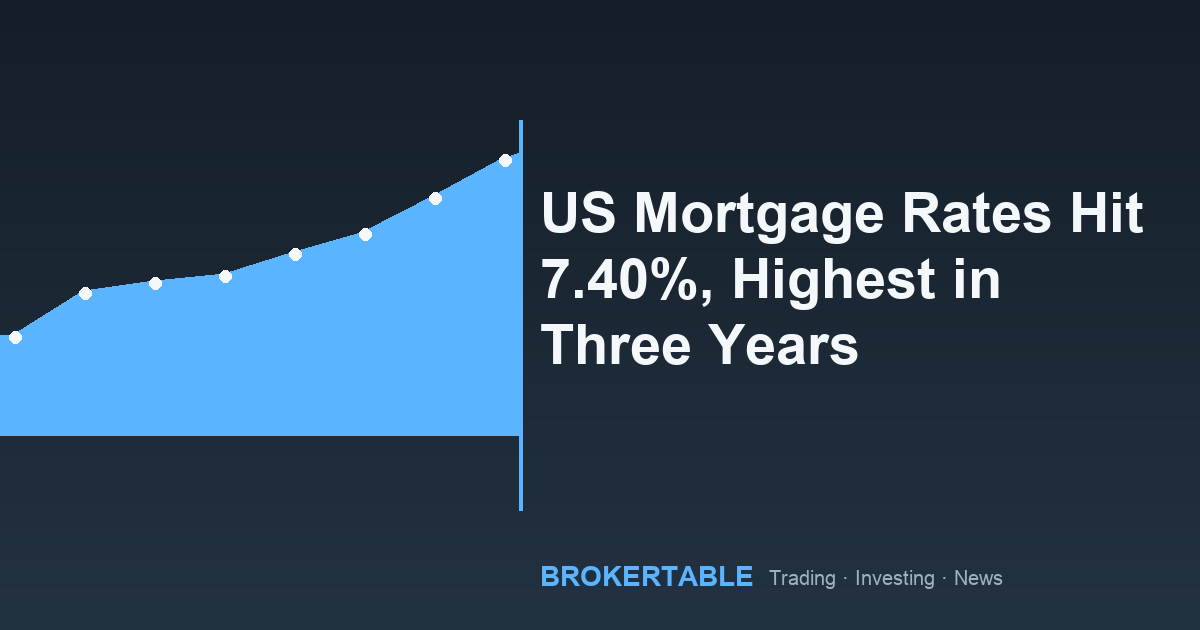
The average rate on a 30-year fixed-rate mortgage in the United States climbed to 7.40% as of October 8, 2026, according to data released by Freddie Mac. That is up from 7.28% the previous week and represents the highest level in nearly three years.
The increase marked the seventh consecutive weekly rise in the popular home loan product. A year earlier, the 30-year fixed-rate mortgage averaged 6.30%, according to the same Freddie Mac survey.
What happened
Freddie Mac reported on October 8, 2026, that the 30-year fixed-rate mortgage averaged 7.40%, up from 7.28% a week earlier. The 15-year fixed-rate mortgage also increased, averaging 6.73% compared with 6.60% the prior week. One year ago, the 15-year loan averaged 5.53%.
The data comes from Freddie Mac’s Primary Mortgage Market Survey, which collects rates from thousands of loan applications submitted by lenders across the country. The survey covers conventional, single-family purchase loans with conforming loan limits set by the Federal Housing Finance Agency.
Newsweek reported on October 2, 2026, that the 30-year rate had already reached 7.28% that week, the highest point since November 2023. That report described the jump as the biggest one-week leap in four years.
Rising Treasury yields have played a central role. The 10-year Treasury yield rose to 5.34% on a Thursday in early October, its highest level since 2002, according to Newsweek. The yield has been pushed up by soaring energy costs following the war in Iran that began on February 28, as well as an AI spending boom and a wave of corporate borrowing.
Analysis: Why it matters for investors
The rise in mortgage rates has direct implications for housing-related equities and credit markets. A Yahoo Finance article published on October 6, 2026, noted that when 10-year Treasury yields swing from roughly 4.5% to around 5.3%, mortgage costs, housing activity, and investor nerves all move with them.
Freddie Mac sits at the center of this dynamic because its secondary market role links policy support to real mortgage liquidity. The company reported a single-family mortgage portfolio of US$3.7 trillion and a 51% government-sponsored enterprise market share, according to the Yahoo Finance piece. That scale means changes in refinancing activity can affect net interest income and fee-driven revenues.
Mortgage insurers and commercial real estate lenders also face pressure. Radian Group, which provides US mortgage insurance, generates about US$1.2 billion from that segment. Walker & Dunlop, which originates and services government-linked multifamily financing, reported roughly US$686 million from capital markets and US$497 million from servicing and asset management.
Higher borrowing costs tend to reduce the number of loans written, which can weigh on origination volumes and mortgage insurance activity. However, the sources do not provide specific forecasts for how far volumes may fall.
Who is affected
Homebuyers face the most immediate impact. Realtor.com senior economist Hannah Jones said in a statement to Newsweek that the 30-year mortgage rate has risen nearly a full percentage point over the past year. That increase has added more than $200 to the monthly principal and interest payment on a median-priced home, even as the median price has fallen year-over-year.
Lenders and mortgage investors are also exposed. Freddie Mac, Radian Group and Walker & Dunlop are among the companies whose earnings are tied to how many loans get written when conditions change. The Yahoo Finance article described Radian’s earnings and valuation as tied to mortgage activity, while Walker & Dunlop sits where government-supported multifamily capital and refinancing needs meet.
Borrowers who were waiting for rates to drop to 6% or lower face a difficult environment. Newsweek reported that experts had forecast such a decline by the end of 2025, but the recent increase has reversed that outlook.
What is still uncertain
The sources do not say how long rates will remain elevated or whether they will rise further. Newsweek noted that softer personal consumption expenditures data and dovish comments by the Federal Reserve briefly lowered expectations for a rate cut, but all eyes were on the jobs report for more clues.
A September jobs report showed weaker-than-expected growth, with 29,000 net new jobs. That suggests the US economy is not overheating, but the sources do not state how the Federal Reserve will respond.
Conclusion: What to watch next
Investors and borrowers should monitor the 10-year Treasury yield, which has been the main driver of mortgage rate movements. Energy prices, corporate borrowing demand and Federal Reserve policy signals will also matter.
Freddie Mac publishes its Primary Mortgage Market Survey each Thursday at noon Eastern Time, so the next release will show whether the seven-week climb continues or begins to level off.
Sources
- freddiemac.com: Mortgage Rates
- Yahoo Finance: Freddie Mac Stock And Rate Sensitive Housing Plays Worth A Closer Look (published 2026-10-06)
- Newsweek: Mortgages Hit Three-Year High: How Much More a Typical House Now Costs (published 2026-10-02)
Sources accessed on October 08, 2026. Figures as reported by the sources above.
Frequently Asked Questions
What is the current average 30-year fixed mortgage rate?
The average 30-year fixed-rate mortgage was 7.40% as of October 8, 2026, according to Freddie Mac. This is up from 7.28% the previous week.
How many consecutive weeks have mortgage rates risen?
Mortgage rates have risen for seven consecutive weeks as of October 8, 2026, according to Freddie Mac data.
What was the 30-year mortgage rate one year ago?
One year ago, the 30-year fixed-rate mortgage averaged 6.30%, according to Freddie Mac. The 15-year fixed-rate mortgage averaged 5.53%.
Why are mortgage rates rising?
Rising 10-year Treasury yields are a key factor. The 10-year yield hit 5.34%, its highest since 2002, driven by energy costs, AI spending and corporate borrowing, according to Newsweek.
How much have higher rates added to monthly payments?
Realtor.com senior economist Hannah Jones said the rise in the 30-year rate has added more than $200 to the monthly principal and interest payment on a median-priced home.
AI Notice: This article was created wholly or predominantly with the assistance of artificial intelligence and was published without human editorial review.
This article is for general information only and does not constitute investment advice. Always do your own research before making trading decisions.