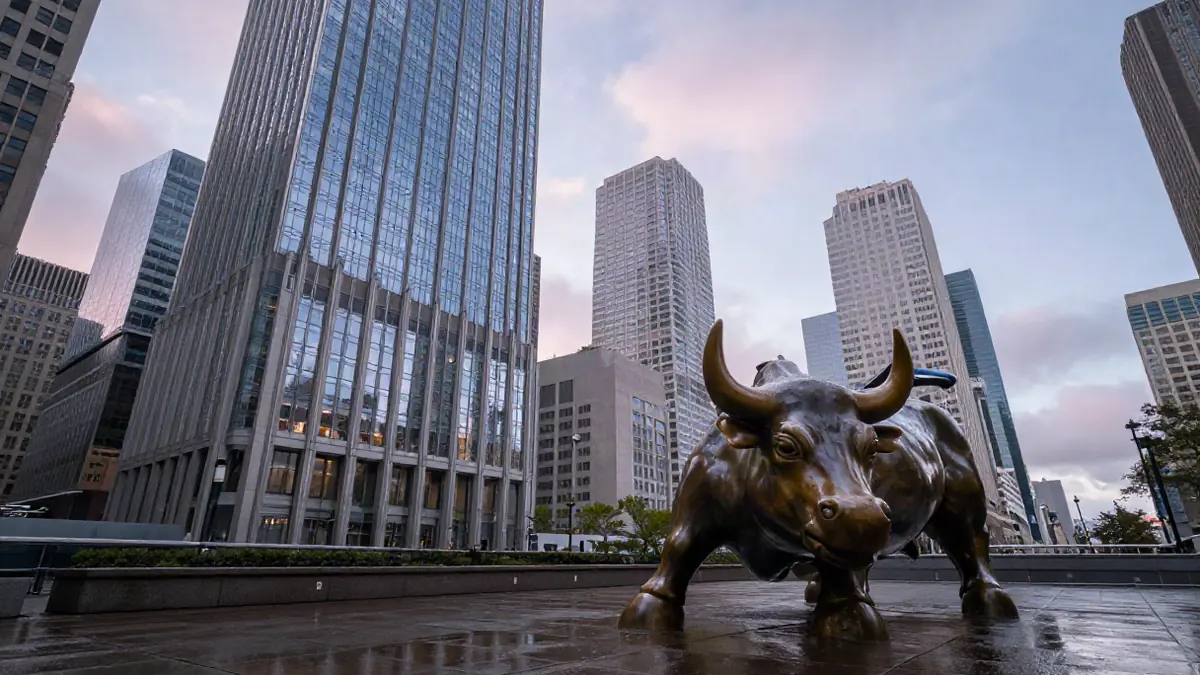
An IPO is a company selling newly issued shares to public investors, usually with the help of underwriting banks. The opening price is not discovered by the market on day one. It is negotiated in advance through a process called bookbuilding, and that process explains much of the strange price action you see when trading starts.
First-day volatility comes from a simple mismatch. A small slice of the company’s shares is available to trade, while demand from index funds, retail buyers and momentum traders can be enormous. Add the fact that insiders are locked out of selling and that no historical price chart exists, and you get a stock with no anchor. The sections below walk through the mechanics, the typical patterns, and what each of those means for a short-term trader versus a long-term investor.
What bookbuilding actually does
Before a single share trades publicly, the underwriters take the company on a roadshow, meeting institutional investors and collecting indications of interest at various prices. This process, known as bookbuilding, produces an order book that tells the banks how much demand exists at each price level. The final offer price is then set somewhere inside the range that was published in the prospectus.
Two things follow from this. First, the offer price is a negotiated number, not a market-clearing one. Banks routinely price an IPO below what they believe the market will pay, because a first-day pop pleases the clients who received allocations. Second, the allocation itself is discretionary. The bank decides who gets shares, and large institutional clients tend to get more than small ones.
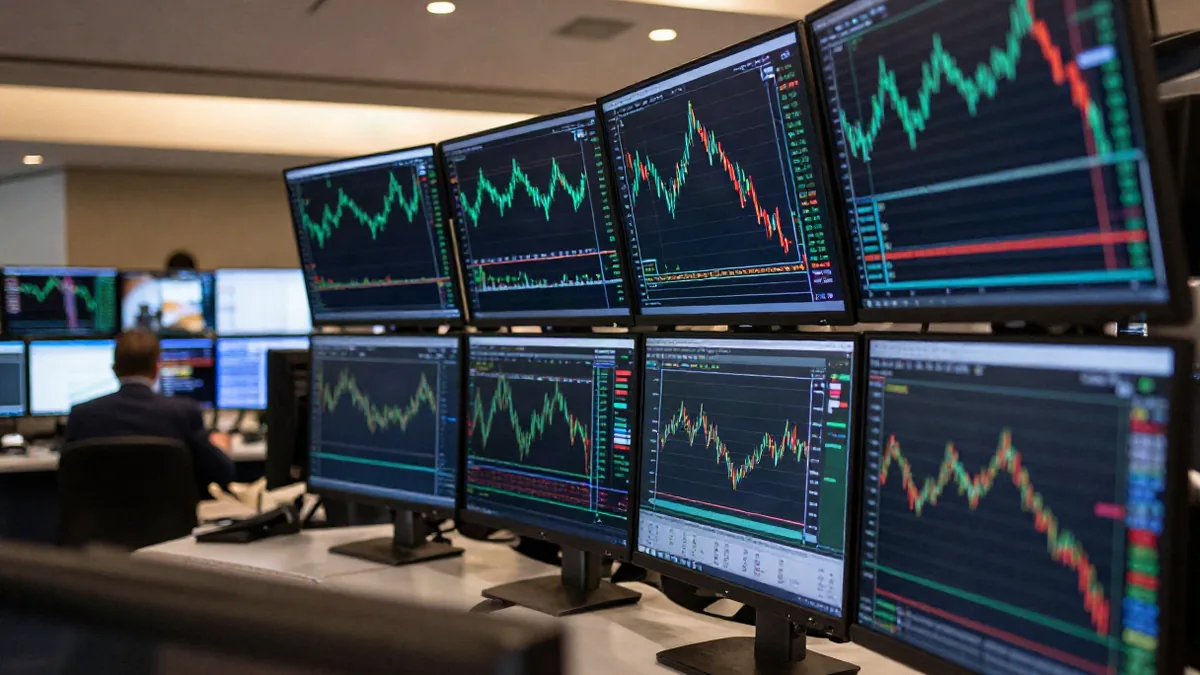
For you as a retail investor, this matters because the shares you can buy on day one are usually bought from those allocated investors, not from the company. The company already has its money. What changes hands after the opening bell is secondary trading, and the price reflects whatever the marginal buyer and seller agree on.
Why the free float is small on day one
The free float, or Streubesitz in German usage that many UK and US market participants still recognize from European coverage, is the portion of shares actually available to trade. On IPO day it is typically a fraction of the total share count. Founders, early employees, venture investors and the company itself hold the rest, and most of those holdings are restricted.
A small float against heavy demand produces outsized price moves. If only a few percent of the company is tradeable and a large index fund needs to build a position, the order can move the price sharply. The same works in reverse. A modest wave of selling can push the stock down hard because there are few buyers standing in the way.
This is also why IPO prices can gap wildly at the open. The opening auction on exchanges like Nasdaq or the NYSE may take time to clear when the order imbalance is large. The first printed trade may be far above or below the offer price, and that print sets the reference point for everything that follows.
Lock-up periods and the supply overhang
A lock-up is a contractual restriction that prevents insiders from selling shares for a set period after the IPO, commonly around six months though the exact terms are in the prospectus. The purpose is to stop a flood of insider selling from hitting the market immediately.
The lock-up does not remove the overhang; it postpones it. As the expiry approaches, the market starts to anticipate additional supply, and while some holders sell as soon as they are allowed, others wait. The result is that the months around lock-up expiry often see elevated volatility and, in many cases, downward pressure, though this is a tendency rather than a rule.
For a trader, the lock-up calendar is a known event. For an investor, it is a reminder that the share count you see on day one is not the share count you will see in a year. Read the prospectus for the exact lock-up terms and any early-release provisions.
Typical first-day patterns
There is no law that says an IPO must pop, but a few patterns recur often enough to be worth knowing.
- Pricing below demand. When the book is heavily oversubscribed, banks often price conservatively. The first trade can open well above the offer price, and the stock may fade during the session as allocated investors take profits.
- The opening auction delay. A large imbalance can delay the first trade by minutes or hours. Traders who place market orders before the open can get filled at surprising prices.
- Volume concentration. A large share of early volume often comes from a relatively small number of accounts. That makes the tape less representative of broad demand than it looks.
- Post-pop drift. Some IPOs give back a chunk of their first-day gain in the following weeks. Others hold. The difference usually comes down to whether the business keeps delivering against expectations, which is not knowable on day one.
These are observed tendencies, not predictions, because each deal has its own float size, its own investor base and its own story.
The trader’s view: weeks to six months
If your horizon is relatively short-term, the IPO is mostly a supply-and-demand event. You are trading a stock with a thin float, no long price history and a known calendar of lock-up expiries. Position sizing matters more than usual because the range of outcomes is wide.
The opening auction is the first risk point. Market orders before the first print can fill at prices far from where you expected. Limit orders give you control but may not fill at all if the stock gaps away. Many experienced traders simply wait for the first fifteen to thirty minutes to pass before acting, though that is a preference rather than a rule.
The second risk point is the lock-up expiry. If you plan to hold a position into that window, check the exact date and the size of the shares becoming eligible. A large release into a thin market can change the supply picture quickly.
Finally, be honest about the information gap. On day one you have a prospectus, a roadshow narrative and a price, but you do not have a track record as a public company. Volatility is high partly because everyone else is in the same position.
The investor’s view: six months and beyond
If your horizon is longer, the first-day price is close to irrelevant. What matters is whether the business earns more than its cost of capital over time, and that question is answered by quarterly results, not by the opening pop.
There is a practical argument for waiting. The lock-up expiry adds supply, and the first few earnings reports give you real numbers instead of projections. You give up the chance of a large first-day gain, but you also avoid paying a price set by short-term demand.
Read the prospectus with a skeptical eye. Look at how the company defines its market, how it counts customers, and what portion of revenue comes from the largest clients. Check whether the selling shareholders are insiders cashing out or the company raising new money for growth. Those are different signals, and the prospectus states which is which.
One more point on the float. A small free float can support the price early on, but it also means the stock can be volatile for months. If you hold a position, expect wider swings than you would see in a mature large cap.
Where the volatility really comes from
Strip away the headlines and first-day volatility has four sources. The float is small, and the price has no history. The allocation of shares is concentrated in a few hands, while the lock-up means the true supply is not yet in the market.
None of that tells you which direction the stock will go. It tells you the distribution of outcomes is wide, and that both large gains and large losses are more likely than in a typical trading session. Treat the first day as an event with unusual mechanics, not as a verdict on the company.
Conclusion: read the mechanics before the tape
An IPO price is set by bookbuilding, a negotiated process that often leaves money on the table for allocated investors. The shares that trade on day one are a small slice of the company, because lock-ups keep insiders out of the market. That combination of thin float and concentrated allocation is what makes first-day trading so volatile.
If you trade the event, know the auction mechanics, the float size and the lock-up calendar. If you invest, wait for the numbers and read the prospectus for who is selling and why. The first-day price tells you about demand on one morning; it tells you very little about the business.
- What Is Trading and How Does It Actually Work?
- Settlement Explained: What T+1 Means for Your Trades
- What is leverage and how does it work in stock trading?
Frequently Asked Questions
What is bookbuilding in an IPO?
Bookbuilding is the process where underwriters collect indications of interest from institutional investors at different prices before setting the final offer price. The order book shows demand at each level, and the bank uses it to price the deal and allocate shares.
Why is an IPO stock so volatile on the first day?
Only a small portion of shares, the free float, is available to trade while demand can be large. With no price history and concentrated allocations, relatively modest buying or selling can move the price sharply.
What is a lock-up period?
A lock-up is a contractual restriction that stops insiders and early investors from selling shares for a set period after the IPO, often around six months. The exact terms are stated in the prospectus, and the expiry can add supply to the market.
What does free float mean for an IPO?
Free float is the portion of a company's shares that is actually available to trade publicly. A small free float on IPO day means fewer shares can absorb demand, which tends to increase price swings in both directions.
Should long-term investors buy on the first day?
There is no universal answer, but waiting has practical advantages. After the lock-up expiry and the first few earnings reports you have real financial data instead of projections, at the cost of missing any first-day gain.
AI Notice: This article was created wholly or predominantly with the assistance of artificial intelligence and was published without human editorial review.
This article is for general information only and does not constitute investment advice. Always do your own research before making trading decisions.