News · November 05, 2026, 18:31 UTC
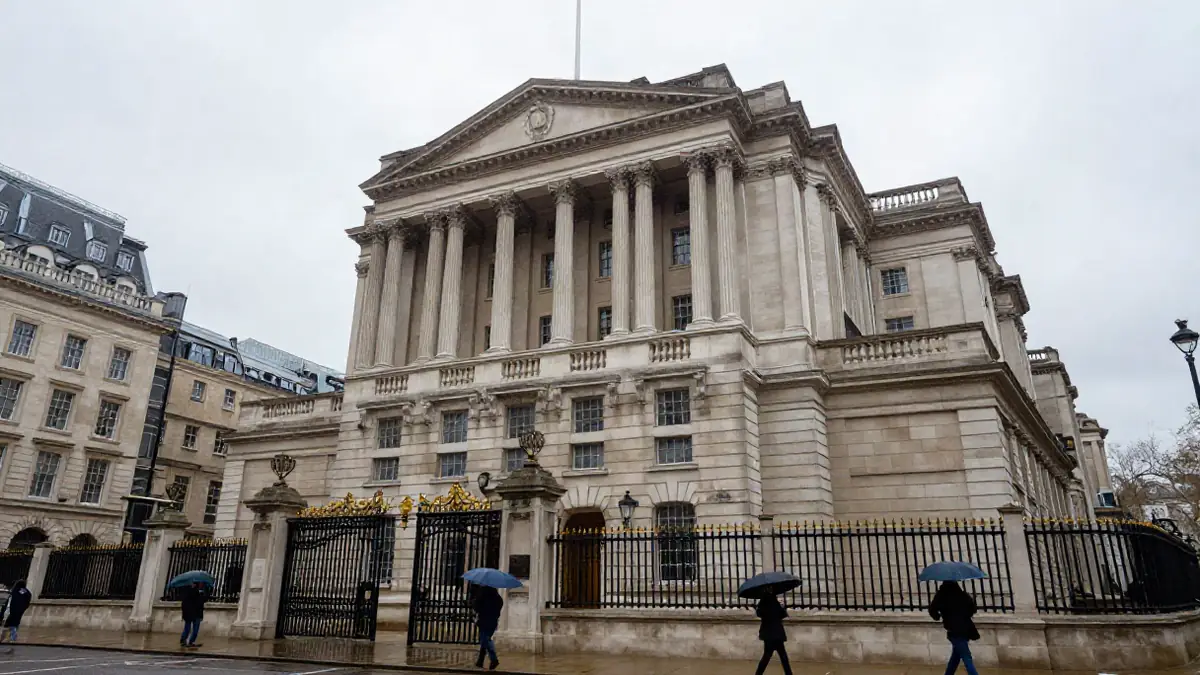
The Bank of England raised its key interest rate to 4% from 3.75% on November 5, 2026, marking the first increase in more than three years. The decision by the Monetary Policy Committee was reported by BBC News and Yahoo Finance, which said the move was widely expected by economists.
Governor Andrew Bailey pointed to the conflict in the Middle East as the main factor behind the decision, since it has pushed up energy prices. The Bank now expects inflation, currently at 3.5%, to peak at 4.9% next year.
However, according to Yahoo Finance, it could reach 6% next summer if the Iran war continues.
What happened
The Bank of England’s rate-setting committee voted to lift the base rate to 4% on November 5, 2026, the first rise since August 2023, Yahoo Finance reported.
All policymakers favored an increase, with one member, Catherine Mann, calling for an immediate 0.5 percentage point jump to 4.25%, according to the outlet.
Bailey said the decision should not be seen as the start of an “inevitably long sequence of hikes,” but warned it is “not likely to be the last” unless the Iran war is resolved.
Other MPC members, including Clare Lombardelli, Huw Pill and Megan Greene, also indicated further increases could be on the cards, Yahoo Finance reported.
The Bank’s projections suggest inflation will peak around 5% by mid-2027 even if the economy slows, and could hit 6% next summer if the conflict drags on. The Ofgem energy price cap is expected to rise by more than £400 to £2,150 in January, according to Yahoo Finance.
Chancellor John Healey said the government was acting to give “breathing space” to families and businesses, while shadow chancellor Andrew Griffith said it was time for Labour to “cut taxes, welfare spending and costly regulations,” the BBC reported.
Analysis: Why it matters for investors
The rate rise signals that the Bank is prioritizing inflation control over supporting growth, which could weigh on consumer-facing sectors and rate-sensitive assets. Higher rates tend to pressure gilt prices and raise yields, though the sources did not provide specific gilt yield figures.
Money markets are pricing further tightening, with traders betting the Bank will raise rates to 4.75% by the end of next summer, according to Yahoo Finance.
April LaRusse of BNY Investments warned that markets may be “somewhat too aggressive” in the scale of further tightening they expect, the outlet reported.
For equity investors, the FTSE 100 remained up 0.7% in London despite the Bank’s signal of more rises, Yahoo Finance said. US tech stocks fell, with the Nasdaq Composite down 1.2% at the open, while the Dow Jones Industrial Average rose 0.5% as investors rotated into traditional sectors.
Who is affected
About 500,000 homeowners with tracker mortgages will see monthly repayments rise by about £31 for a typical loan, BBC News reported. An additional 500,000 on standard variable rates must wait to see if lenders pass on the increase, typically a £14 monthly rise for a 0.25 percentage point increase.
The 87% of mortgage-holders on fixed-rate deals will see no immediate change to monthly payments, but future deals will reflect the new rate environment. Lenders had already priced in the rise when quoting new deals, according to the BBC.
Savers could benefit from improved returns, though the BBC noted that leaving money in old accounts can be costly. Indeed, Rachel Springall of Moneyfacts said savers who kept £20,000 in closed accounts lost out on an extra £139 over the past three years compared with on-sale easy access accounts.

Businesses, particularly small firms with variable-rate loans, face higher borrowing costs. Mitchell Barnes, chief executive of Ryse 3D, told the BBC that rising rates could lead to reduced employment and more automation.
What is still uncertain
The sources do not say how many further rate increases the Bank will implement or their timing. Bailey said rates are not on a “pre-set path” and each decision will depend on economic data and progress in the Middle East conflict.
The full Monetary Policy Report was not available to brokertable.net, and details are based on the outlets’ reporting.
Conclusion: What to watch next
Investors will focus on the Bank’s next meeting and any signals from Bailey and other MPC members about the pace of tightening. The trajectory of energy prices and the Iran conflict will be critical, as will the January Ofgem price cap announcement.
Mortgage lenders’ decisions on standard variable rates and savings providers’ responses will also be closely watched.
Frequently Asked Questions
What interest rate did the Bank of England set on November 5, 2026?
The Bank of England raised its key interest rate to 4% from 3.75% on November 5, 2026, according to BBC News and Yahoo Finance. It was the first increase in more than three years.
Why did the Bank of England raise rates?
Governor Andrew Bailey cited the conflict in the Middle East, which has pushed up energy prices, as the main factor. The Bank expects inflation, currently at 3.5%, to peak at 4.9% next year.
How will the rate rise affect mortgage holders?
About 500,000 homeowners with tracker mortgages will see monthly repayments rise by about £31 for a typical loan, BBC News reported. Those on standard variable rates may see increases of about £14 per month for a 0.25 percentage point rise.
Could there be more rate rises?
Bailey said the increase is "not likely to be the last" unless the Iran war is resolved. Other MPC members also indicated further increases could be on the cards, and markets expect rates to reach 4.75% by the end of next summer.
What does the rate rise mean for savers?
Higher rates could improve returns for savers, though the BBC noted that leaving money in old accounts can be costly. Rachel Springall of Moneyfacts said savers who kept £20,000 in closed accounts lost out on an extra £139 over three years compared with on-sale easy access accounts.



AI Notice: This article was created wholly or predominantly with the assistance of artificial intelligence and was published without human editorial review.
This article is for general information only and does not constitute investment advice. Always do your own research before making trading decisions.